

📅 Updated July 2026
⏱️ 11 min read
🔬 Science-Backed
If you’ve been considering blue light glasses, you’re asking exactly the right question. It was 11:30 PM. You told yourself you’d only check your phone for five minutes. An hour later, you’re still scrolling — eyes dry, mind racing, and sleep feeling further away than ever.
You told yourself you’d only check your phone for five minutes. An hour later, you’re still scrolling — eyes dry, mind racing, and sleep feeling further away than ever. We’ve all been there. And if you’ve ever wondered whether those amber-tinted glasses your colleague swears by could actually help — you’re asking exactly the right question.
Blue light blocking glasses have exploded in popularity over the last few years. You’ve seen them everywhere: on biohacking podcasts, in office supply catalogues, recommended by sleep coaches and productivity gurus alike. But the honest truth is that the conversation around blue light is far more nuanced than most people realize. Do these glasses actually work? The answer, as with most things in science, is: it depends.
At PeakModus, we went deep on the research — reading the studies, testing the products, and talking to sleep specialists — so you don’t have to. What we found surprised us. Blue light glasses can make a real difference, but only if you understand what they actually do, when to wear them, and which lens type matches your lifestyle.
Want to track how much your sleep improves? Check out our guide on the best sleep trackers to complete your sleep optimization setup.
This guide will walk you through everything: the science, the skepticism, the best products available on Amazon right now, and the practical tips that will actually move the needle on your sleep quality tonight.
of adults use screens within 1hr of bedtime
average melatonin delay from evening screen use
glasses tested & ranked in this guide
- The Science — How Blue Light Affects Your Sleep — What the research actually says
- Do Blue Light Glasses Actually Work? — Honest answer
- The 3 Lens Types Explained — Clear vs Amber vs Red
- The 5 Best Blue Light Glasses on Amazon
- When & How to Wear Them — Timing matters more than you think
- Frequently Asked Questions
- Final Verdict
The Science — How Blue Light Actually Affects Your Sleep
To understand blue light glasses, you first need to understand melatonin — the hormone that signals to your body that it’s time to sleep. Your brain produces melatonin in response to darkness. When the sun goes down, melatonin rises, your body temperature drops, and you start to feel sleepy. It’s an elegant, ancient system that has worked perfectly for hundreds of thousands of years.
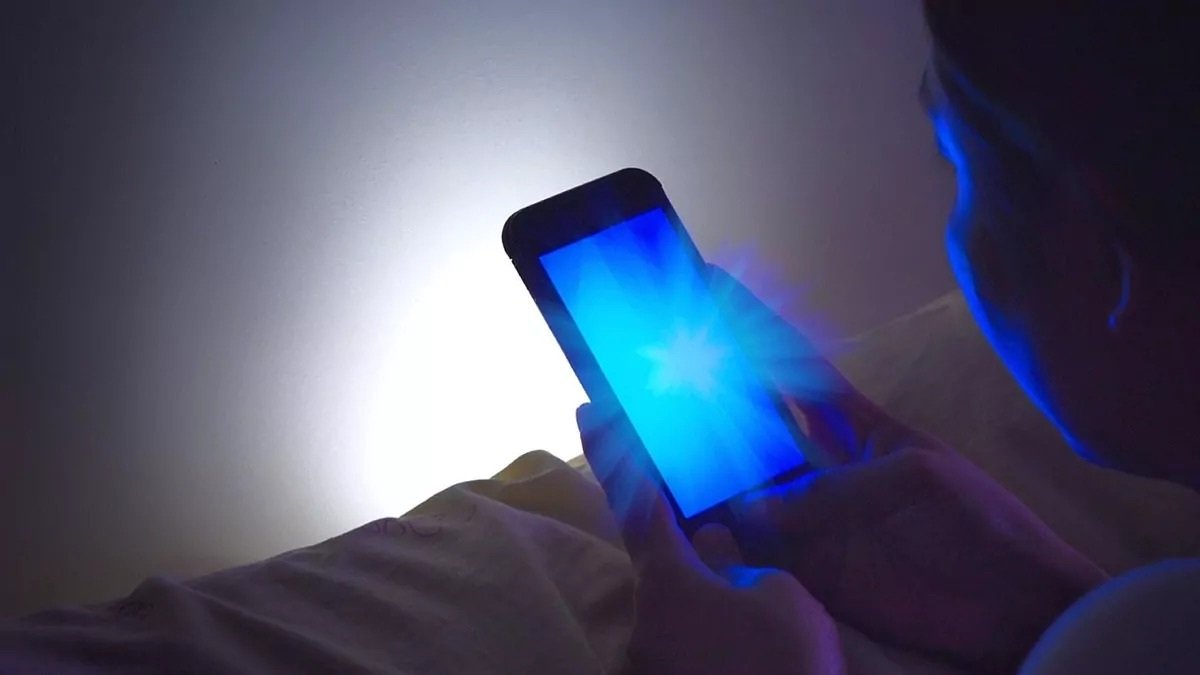
The problem? Modern screens. Phones, laptops, TVs, and even LED lighting emit light in the blue wavelength range (roughly 450–490 nanometers). This specific wavelength is particularly effective at suppressing melatonin production — because it mimics the color of midday sky, telling your brain that it’s still daytime.
🔬 What the Research Says
A landmark study published in the Journal of Applied Physiology found that evening exposure to blue light suppresses melatonin production for up to 3 hours — significantly delaying the onset of sleep.
The same research found that blocking blue wavelengths in the evening — through amber-tinted lenses or dedicated red glasses — partially restored melatonin production and improved sleep quality scores. The key word is partially: glasses are a mitigation strategy, not a cure.
How Blue Light Disrupts Your Sleep — Step by Step
Step 1 — Your screen emits blue light
Phones, laptops and TVs all emit significant blue wavelength light (450–490nm), especially LED-backlit screens. Most disruptive in the 2–3 hours before bedtime.
Step 2 — Your retina sends a “daytime” signal
Specialized cells called ipRGCs are particularly sensitive to blue light. They send signals directly to your brain’s internal clock.
Step 3 — Melatonin production is suppressed
Your pineal gland delays melatonin release by 1–3 hours. Your body stays alert even when you’re trying to wind down.
Step 4 — Sleep is delayed and disrupted
You take longer to fall asleep, get less deep sleep, and often wake earlier. Over time linked to circadian disruption and reduced cognitive performance.
Step 5 — Blue light glasses intercept the signal
Amber or red lenses filter blue wavelengths before they reach your retina. Melatonin production continues on schedule, and sleep comes more naturally.
Do Blue Light Glasses Actually Work? The Honest Answer
Here’s where we have to be straight with you: it depends on the lens. This is the part that most articles skip over, and it’s the most important thing to understand before you spend any money.
The 3 Lens Types — Which One Do You Actually Need?
| Lens Type | Blue Light Blocked | Best For | Sleep Impact |
|---|---|---|---|
| 🔵 Clear Lenses | 5–20% | Daytime eye strain | Minimal |
| 🟡 Amber Lenses | 50–80% | Evening, 2hrs before bed | Significant |
| 🔴 Red Lenses | 90–99% | Last hour before bed | Maximum |
Most people buy clear “computer glasses” thinking they’ll sleep better — and wonder why nothing changed. If better sleep is your goal, you need amber or red lenses.
The 5 Best Blue Light Glasses on Amazon — Reviewed
Start wearing your blue light glasses 2 hours before your target bedtime. Melatonin suppression builds gradually throughout the evening, so earlier is significantly better than later.
When & How to Wear Blue Light Glasses
2–3 hours before bed → Put on amber glasses
Start early — for most people, this means putting glasses on around 8–9 PM. Melatonin suppression is cumulative so earlier is better.
Keep them on for all screens — TV counts too
Televisions emit just as much blue light as phones and laptops. Keep glasses on for any screen in the evening.
Dim your home lighting too
Bright overhead LED lighting also suppresses melatonin. Switch to warm, dim lamps in the evening.
Use Night Mode as a bonus layer
Enable Night Shift (iPhone) or Night Light (Android) as an additional layer — not a replacement. Combined with glasses, more effective than either alone.
Frequently Asked Questions
Can I just use Night Mode instead of glasses?
Night Mode helps but isn’t a complete solution. Software filters reduce blue light but don’t eliminate it — and don’t affect ambient lighting. Glasses filter everything your eyes receive.
How long before I notice a difference?
Most people notice faster sleep onset within 3–7 days. Deeper improvements typically emerge over 2–4 weeks. Consistency is key — wear them every evening at the same time.
Are cheap blue light glasses effective?
It depends on the lens. A genuine amber lens at $20 (like ANRRI) will be more effective for sleep than a clear lens at $80. Lens color matters far more than frame price.
Final Verdict — Do Blue Light Glasses Work?
Yes — with one condition. The right pair, worn at the right time, can genuinely improve your sleep. But “right pair” means amber or red lenses, not clear computer glasses. And “right time” means starting 2 hours before bed.
Swanwick Sleep — 99% blocking, stylish, the biohacker’s choice.
ANRRI — genuine amber lens under $25. Start here.
TrueDark Twilight — for serious sleep optimization.
Gunnar Optiks Intercept — wide coverage, lighter tint.
Felix Gray Nash — stylish clear lenses for daytime wear.
Consistency beats perfection. Wear them every evening for 2 weeks.



Pingback: Best Sleep Masks: 5 Top Picks for Total Darkness - PeakModus